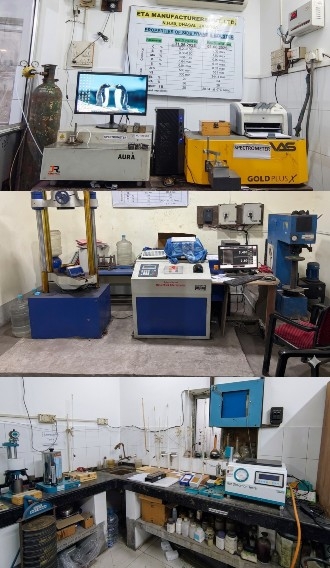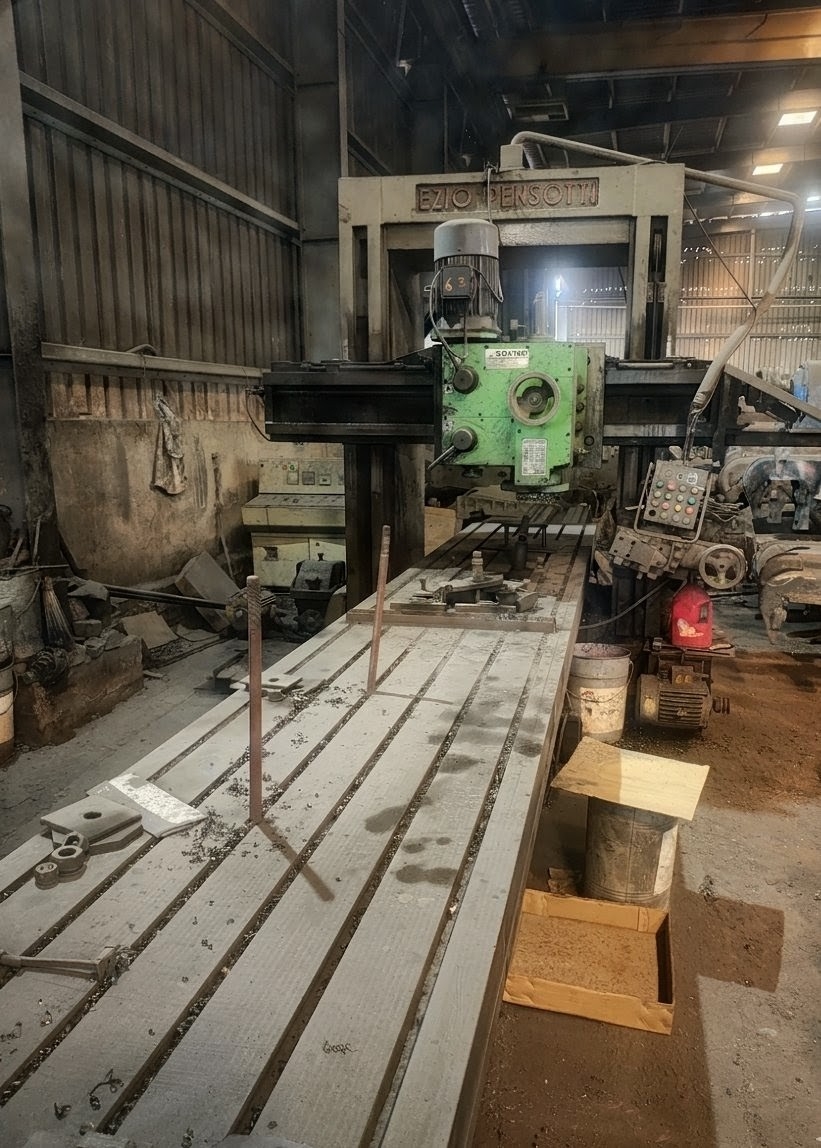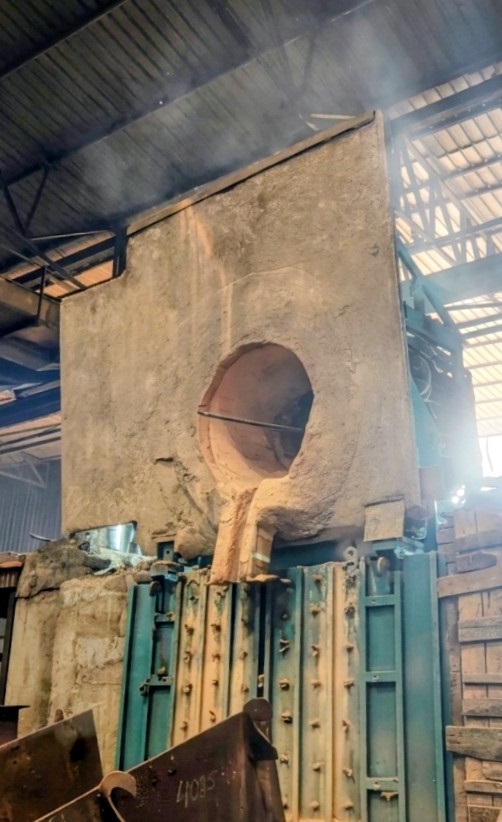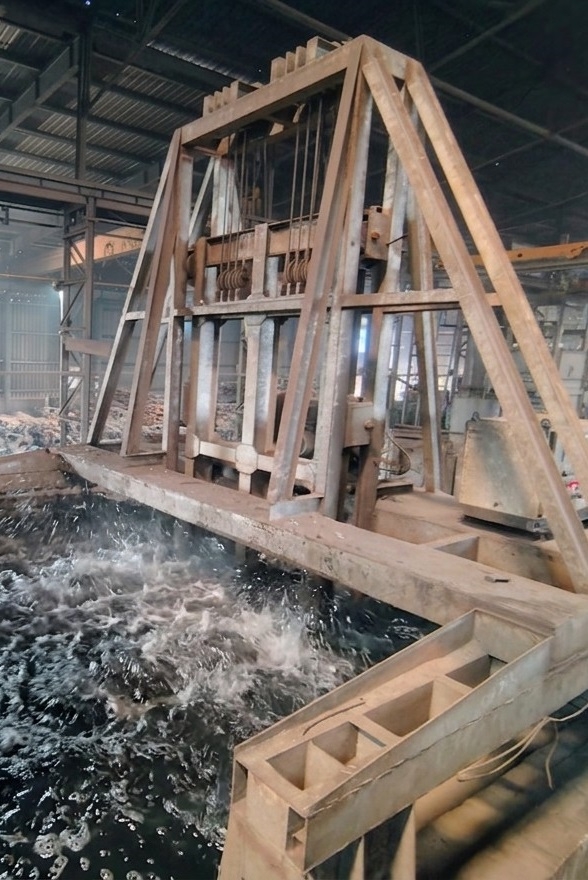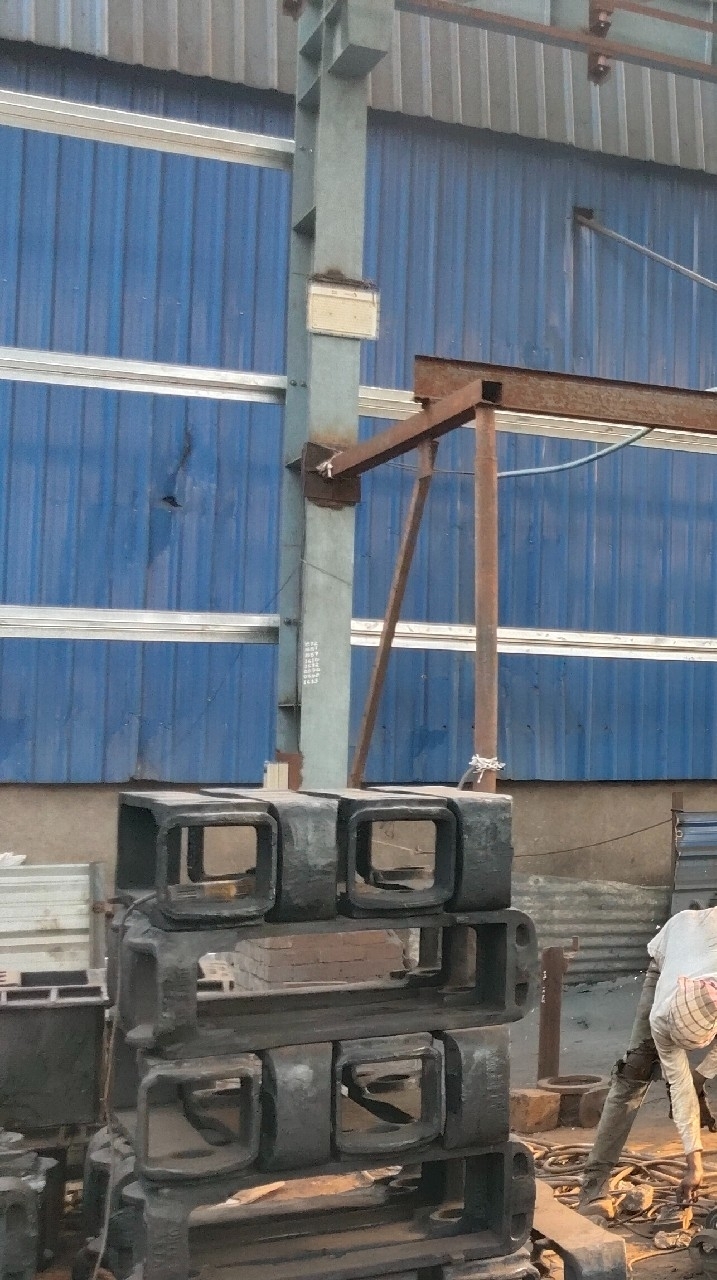
The plant is designed for an integrated casting workflow — from raw material receipt and melting through moulding, pouring, heat treatment, machining, and final inspection — all within a single facility. This integrated layout minimises handling, reduces turnaround time, and gives us full control over quality at every production stage.
Facility Snapshot
|
Facility Area |
Key Equipment / Capability |
|
Melting Shop |
5 Tonne Induction Furnace, 5 Ton Arc Furnace; capable of melting Ductile Iron, Alloy Steel, Manganese Steel, and Carbon Steel grades |
|
Moulding Bay |
No-bake (chemical bonded) sand moulding; accommodates castings up to 3000 kg |
|
Heat Treatment Shop |
8 Tonne and 3 Tonne heat treatment furnaces for normalising, quenching, tempering, annealing, and stress relieving |
|
Machine Shop |
CNC Machining centre for finish machining of castings to drawing tolerances |
|
Testing Laboratory |
In-house physical testing, chemical analysis (spectrometer), NDT, ultrasonic testing, radiography |
|
Pattern Shop |
In-house pattern making and modification capability |
|
Raw Material Yard |
Segregated storage for ferrous scrap, alloy additions, sand, and resin systems |
|
Finished Goods Store |
Covered storage with proper racking for inspected and dispatched-ready castings |
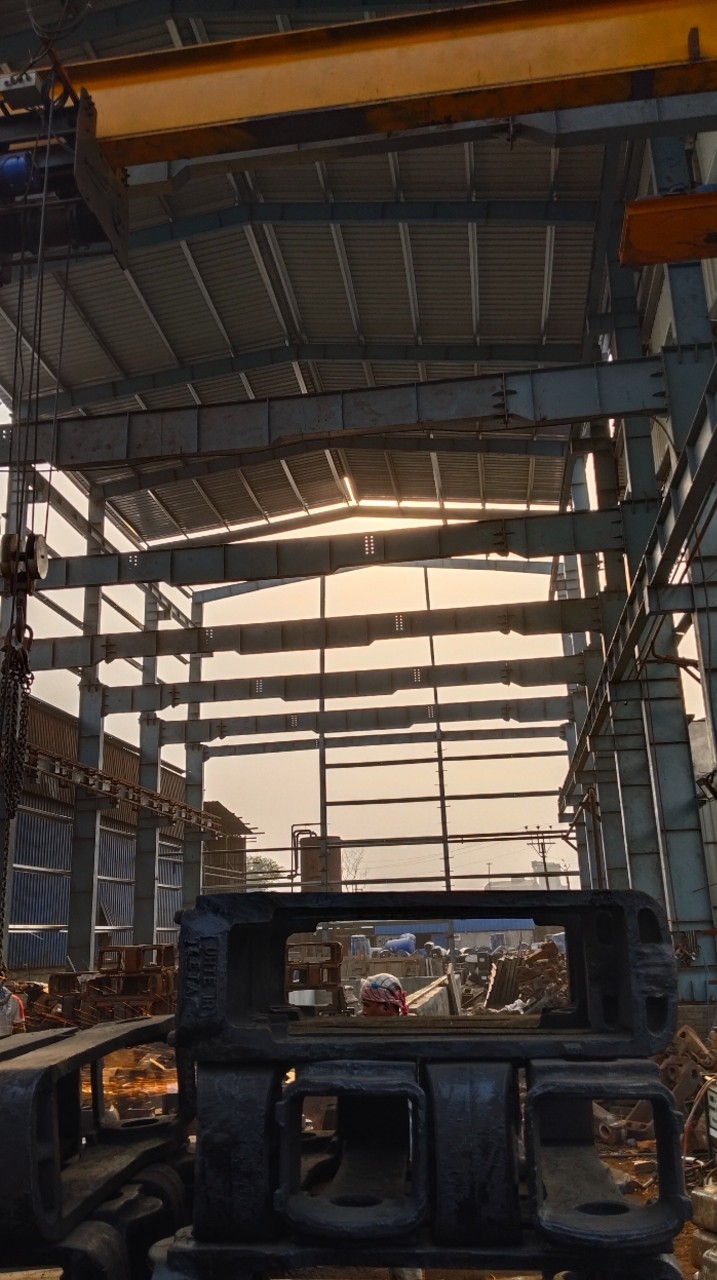
The heart of any foundry is its melting capability. Our Furnace provides clean, efficient, and precisely controlled melting of a wide range of ferrous alloys. Induction melting offers several advantages — accurate temperature control, minimal carbon pickup, low energy consumption, and the ability to closely control the chemical composition of each heat.
We maintain strict charge calculation protocols and verify each heat through spectrometric analysis before tapping. Pouring is carried out by trained operators using pre-heated ladles, with temperature monitoring at the point of pour to ensure optimal filling of the mould cavity. Our process discipline ensures metallurgical consistency across batches, which is particularly critical for RDSO-approved railway components and other safety-critical applications.
Metal Grades We Pour
|
Grade Category |
Typical Grades / Standards |
Applications |
|
Ductile Iron (SG Iron) |
IS 1865, ASTM A536 (60-40-18, 65-45-12, 80-55-06, etc.) |
Railway components, valve bodies, crane wheels, pump housings |
|
Alloy Steel |
IS 4367, ASTM A148, Mn-Mo, Cr-Mo grades |
Crusher parts, rolling mill couplings, heavy-duty gears |
|
Manganese Steel (Hadfield Steel) |
IS 276, ASTM A128 (Gr. A, B1, B2, B3, etc.) |
Crusher jaw plates, cone mantles, liner plates, railway crossings |
|
Carbon Steel |
IS 2708, ASTM A27 |
General engineering components, flanges, brackets |
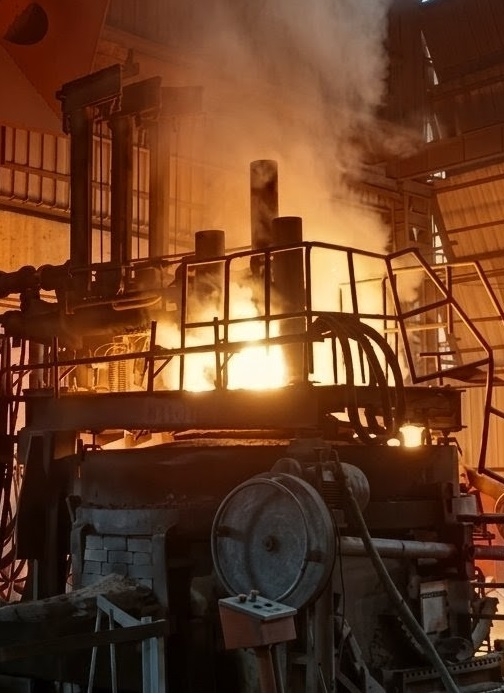
We employ the no-bake (chemical bonded) sand process for all our castings. In this process, sand is mixed with a chemical binder system (typically furan or phenolic urethane resin), which hardens at room temperature without the need for baking. This yields several distinct advantages over traditional green sand moulding:
Superior Surface Finish: No-bake moulds produce castings with significantly better surface quality, reducing or eliminating the need for extensive fettling and grinding.
Dimensional Accuracy: The rigid mould structure ensures tighter tolerances and more consistent dimensions, which is essential for machined and assembly-critical castings.
Complex Geometries: The process accommodates intricate core assemblies and complex shapes that would be difficult to achieve with green sand.
Casting Weight Range: Our moulding capability accommodates castings from approximately 20 kg up to 3000 kg per piece.
Cores are produced in-house using compatible resin systems, ensuring perfect assembly with the moulds. Our experienced moulding team works closely with the pattern shop to optimise gating, risering, and venting for each new casting, reducing defect rates from the very first production run.
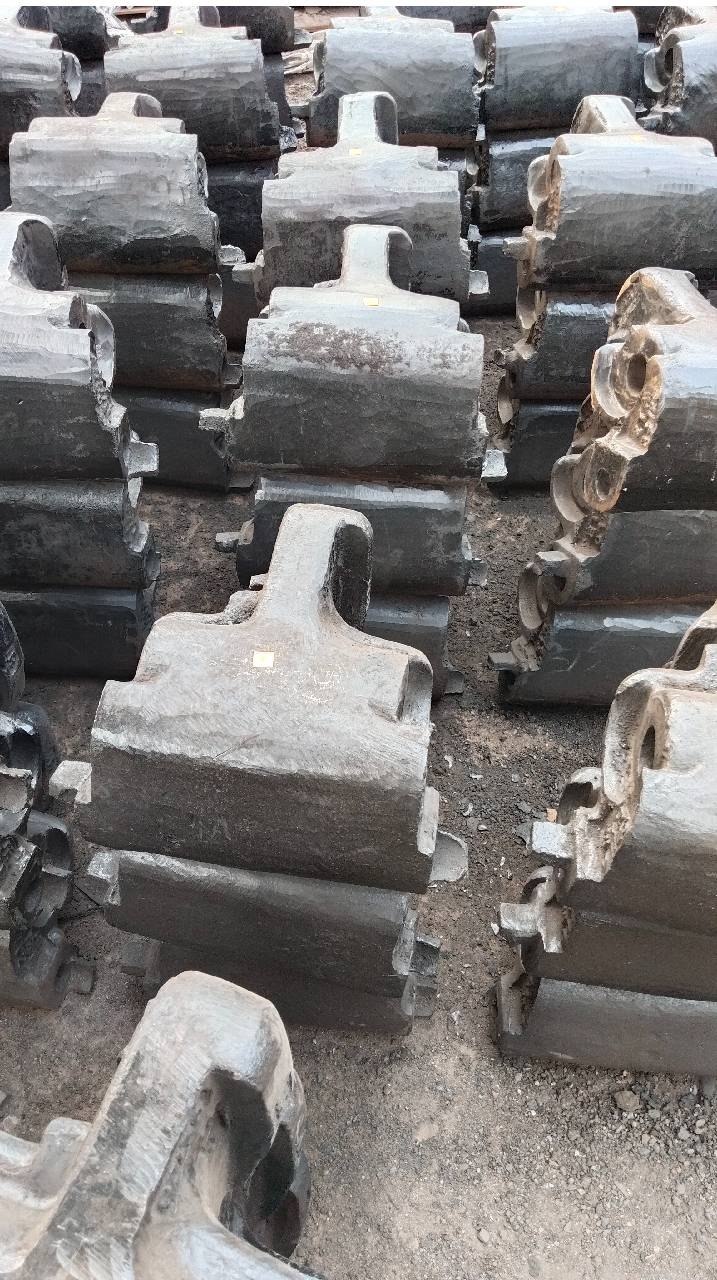
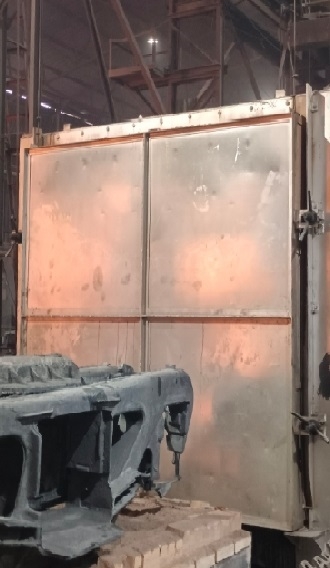
Heat treatment is a critical post-casting process that determines the final mechanical properties, microstructure, and service performance of a casting. Our foundry is equipped with two dedicated heat treatment furnaces — an 8 Tonne and a 3 Tonne unit — allowing us to handle both large batch runs and smaller lots efficiently.
Heat Treatment Processes Offered
|
Process |
Purpose |
Typical Applications |
|
Normalising |
Grain refinement and uniform microstructure |
All steel castings, railway components |
|
Quenching & Tempering |
High hardness with controlled toughness |
Crusher wear parts, high-strength components |
|
Annealing |
Stress relief and improved machinability |
Castings requiring extensive machining |
|
Solution Treatment (Water Quenching) |
Austenite retention in Manganese Steel |
Hadfield manganese steel crusher parts, railway crossings |
|
Stress Relieving |
Removal of residual casting stresses |
Large or complex geometry castings |
All heat treatment cycles are conducted with recorded temperature profiles, and treated castings are verified through hardness testing and, where required, metallographic examination to confirm that the specified mechanical properties have been achieved.
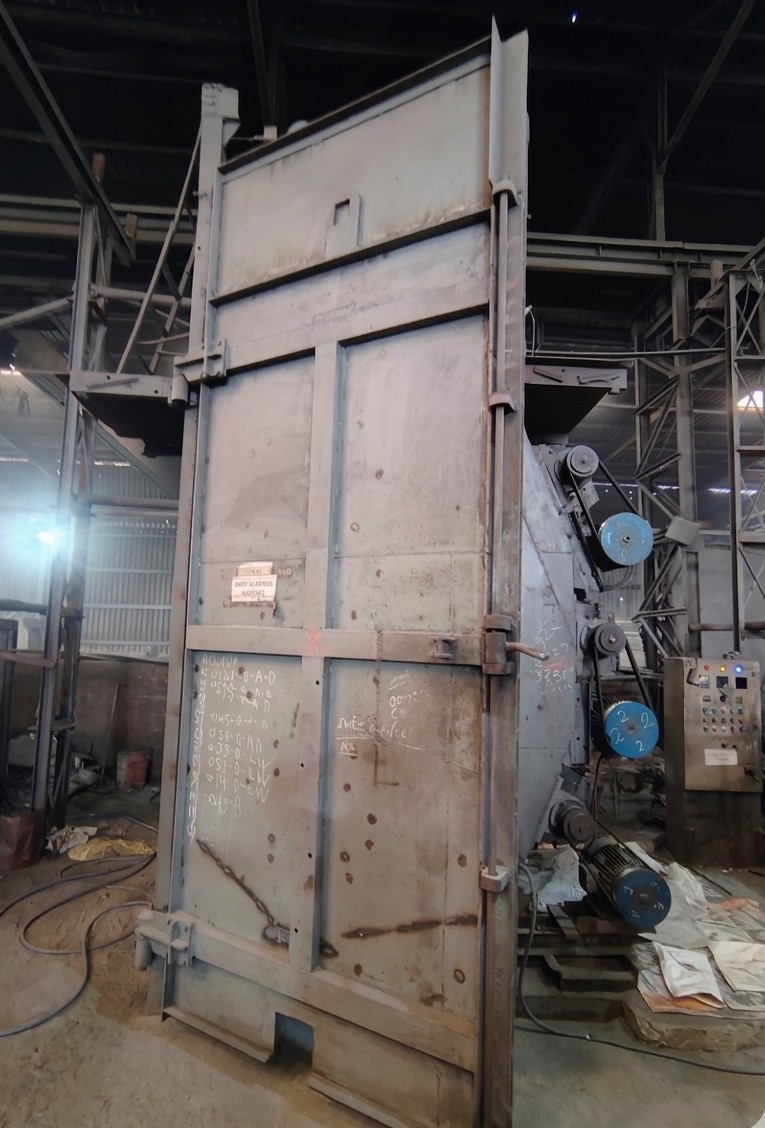
While our core strength lies in casting, we recognise that many clients require semi-finished or fully machined castings delivered to drawing specifications. Our machining facility is equipped with machining capability, enabling us to deliver castings with precision-machined surfaces, bored holes, threaded features, and dimensional finishes as specified.
Quality verification is not outsourced at ETA. Our in-house testing laboratory is equipped to carry out a comprehensive range of tests, ensuring that every casting meets the specified metallurgical, mechanical, and dimensional requirements before dispatch.
Testing Capabilities
|
Test Category |
Equipment / Method |
Parameters Verified |
|
Chemical Analysis |
Optical Emission Spectrometer (OES) |
Complete chemical composition — C, Si, Mn, P, S, Cr, Mo, Ni, Cu, and other elements as required |
|
Mechanical Testing |
Universal Testing Machine (UTM), Impact Tester |
Tensile strength, yield strength, elongation, reduction of area, impact toughness (Charpy / Izod) |
|
Hardness Testing |
Brinell / Rockwell Hardness Tester |
Surface and core hardness verification |
|
Non-Destructive Testing (NDT) |
Various NDT methods |
Defect detection — cracks, porosity, inclusions, shrinkage |
|
Ultrasonic Testing (UT) |
Ultrasonic Flaw Detector |
Subsurface integrity, wall thickness, internal defect detection |
|
Radiography (RT) |
X-ray / Gamma Ray Radiography |
Volumetric inspection for internal soundness — critical for railway and pressure-rated castings |
|
Metallography |
Metallurgical Microscope |
Microstructure examination, nodularity (for SG Iron), grain size, phase distribution |
All test results are documented and provided to clients as part of the material test certificate (MTC) accompanying each consignment. For RDSO and other third-party inspected orders, our laboratory supports inspection by RITES, RDSO inspecting officers, and client-appointed third-party agencies.